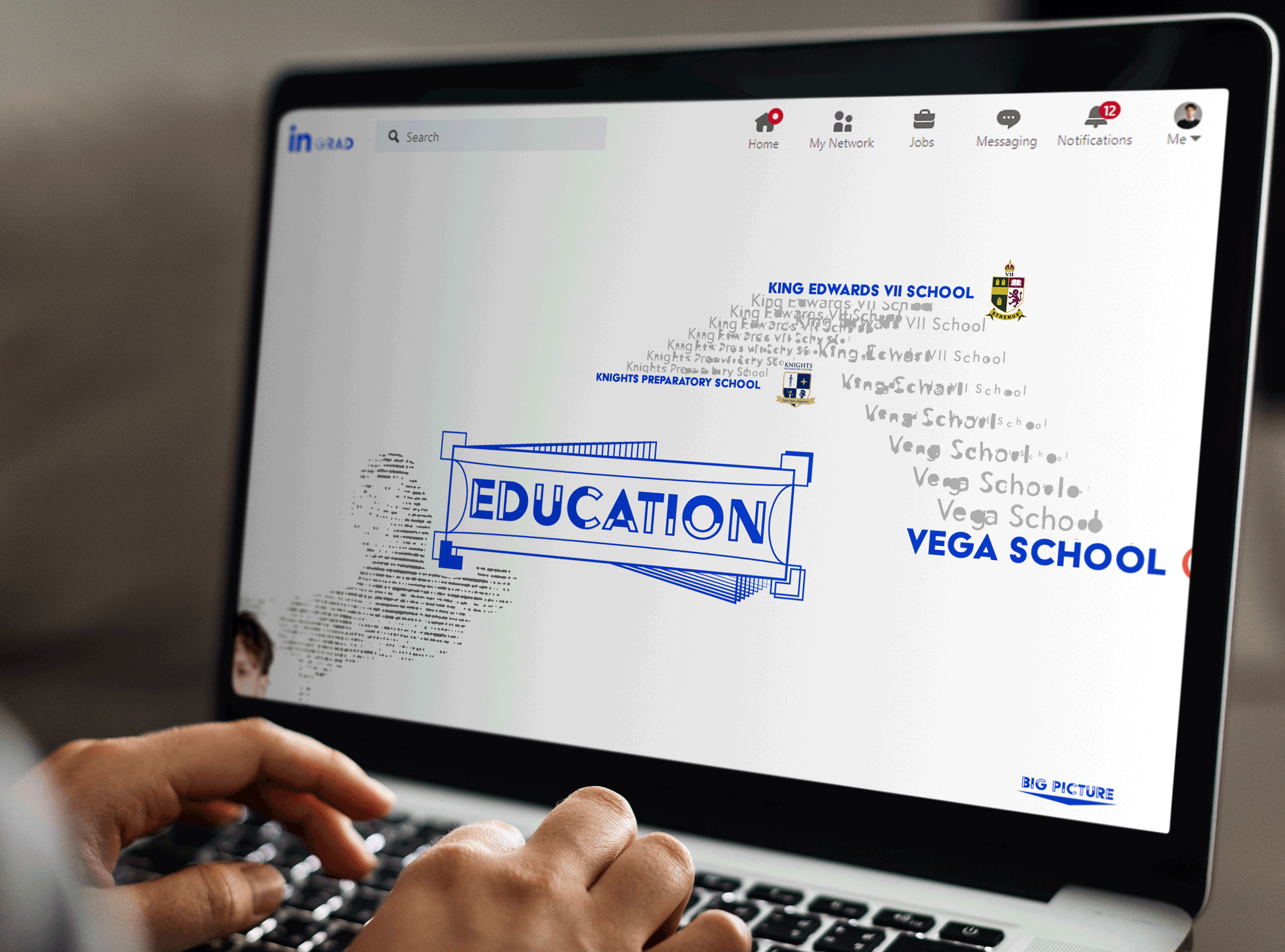
LinkedIn Graduates
South Africa has the capabilities to produce a high skilled labour force but has little industry space to accommodate the new high skilled graduates.
So as students meet the standards set every year, they are seen to have the necessary skills needed to enter the work space, however the 33.6% unemployment rate (Magome, M. 2023) suggests that South Africa’s economy does not the capacity to employ high skill graduates. Why is it that South Africa has such low employment rate with such high standards in tertiary education?
In short the complicated history had made South Africa’s economy stagnant and exploitive – and once the oppressive parties left positions of power, the socioeconomic changes that increased many people’s quality of life was immense (Fourie and Schirmer, 2012). The economy however was not sustainable as the South Africa and the world entered the 21st century. The oppressive powers had neglected and not invested in industries that would’ve been more sustainable, leaving behind a dupable scene for new political powers to figure out. Policies and strategies such as BBBEE and GEAR was implemented to tackle unsolved sociopolitical issues still existing. As the government attempted to appease the social and economic demands high inflation and low external investment into the country complicated the already struggling economy (Fourie and Schirmer, 2012).
So this history paired with years of inconsistent government investment, brain drain and overall corruption has left the employment scene very dubious for new graduates. University students understand the state of the nation and already make plans to move to other, more developed countries after the studies. When this occurs – the economy suffers as there is now shortage of skilled-labour. The questionnaire shows evidence that students have to be aware of government actions as it is what dictates the future generations movements. The high unemployment rate also discourages graduates to stay in South Africa, the job market has not developed to accommodate the fresh talent, and perhaps specific work is being gate-kept. Furthermore, when student feel that the education was of quality, the institute’s credibility trends upward, which helps reinforce a foundation for the other beneficiaries to build upon. Students feel as though they do get a good enough quality of education although they are aware of government actions affecting the job market and therefore are weary about the job market and become scared – likely to leave the country for a more favourable job market in a more developed economy. The developing economy of South Africa has been stagnant and leading nowhere with lackluster government and external investment to create accommodating industries or methods for high skilled graduates, the universities creating highly skilled and knowledgeable people does not align with the state of the job market.

Quality education is an intangible concept universities are trying to make tangible for credibility. Studies done have found that the quality education has boarders that allow for its measurement (Haseena V. A, Ajims P. M. 2015), and the inputs into the quality program positively affect the likelihood students feel they have gotten a quality education from tertiary institutes. The economy has become stagnant due to socioeconomic factors and historic mismanagement. This affects the work economy and how students see their futures.
With the above research in mind, design problems that affect students, reveal themselves. The context provided from the studies on quality education, South African economics and the student-answered questionnaire highlight a part of tertiary education – that acts as a stepping stone for the new graduates – that resembles a void. In highschool students get specialized psychologists to help guide the direction of tertiary studies, and by the end of matric, students get additional information, visits from universities and open-days to further accommodate the correct choice students make. This is the highschool-touniversity stepping stone.
In short the complicated history had made South Africa’s economy stagnant and exploitive – and once the oppressive parties left positions of power, the socioeconomic changes that increased many people’s quality of life was immense (Fourie and Schirmer, 2012). The economy however was not sustainable as the South Africa and the world entered the 21st century. The oppressive powers had neglected and not invested in industries that would’ve been more sustainable, leaving behind a dupable scene for new political powers to figure out. Policies and strategies such as BBBEE and GEAR was implemented to tackle unsolved sociopolitical issues still existing. As the government attempted to appease the social and economic demands high inflation and low external investment into the country complicated the already struggling economy (Fourie and Schirmer, 2012).
So this history paired with years of inconsistent government investment, brain drain and overall corruption has left the employment scene very dubious for new graduates. University students understand the state of the nation and already make plans to move to other, more developed countries after the studies. When this occurs – the economy suffers as there is now shortage of skilled-labour. The questionnaire shows evidence that students have to be aware of government actions as it is what dictates the future generations movements. The high unemployment rate also discourages graduates to stay in South Africa, the job market has not developed to accommodate the fresh talent, and perhaps specific work is being gate-kept. Furthermore, when student feel that the education was of quality, the institute’s credibility trends upward, which helps reinforce a foundation for the other beneficiaries to build upon. Students feel as though they do get a good enough quality of education although they are aware of government actions affecting the job market and therefore are weary about the job market and become scared – likely to leave the country for a more favourable job market in a more developed economy. The developing economy of South Africa has been stagnant and leading nowhere with lackluster government and external investment to create accommodating industries or methods for high skilled graduates, the universities creating highly skilled and knowledgeable people does not align with the state of the job market.